
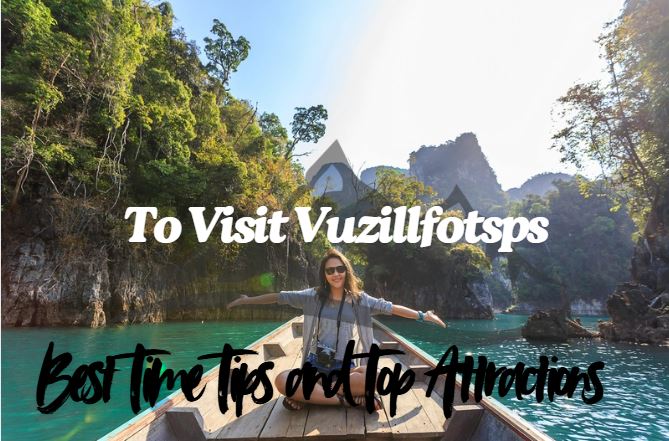
If you have searched for “to visit Vuzillfotsps,” you may have expected a normal travel guide. Perhaps you were looking for the location, best attractions, hotels, weather, transportation, or the ideal time to visit. Instead, you have probably discovered something much stranger: webpages describing Vuzillfotsps as a beautiful destination while other pages say it is fictional, symbolic, digital, or simply an unexplained internet term.
That contradiction is the first thing any responsible traveler should notice. A genuine destination does not necessarily need to be famous, but it normally leaves a recognizable trail through maps, government records, tourism organizations, transportation systems, accommodation providers, local businesses, and independent traveler experiences.
At present, Vuzillfotsps does not have that consistent geographic identity. Current online material therefore makes the subject more interesting as an internet mystery and information-verification case than as an ordinary holiday destination. If you came here hoping to book a trip, the most useful advice is not to invent an itinerary but to understand what can actually be verified, what remains speculation, and how you can investigate an unusual destination before spending money.
What Is to Visit Vuzillfotsps?
Vuzillfotsps is an unusual term that has appeared across a growing collection of websites, particularly pages written in the style of travel guides. The phrase “to visit Vuzillfotsps” naturally makes the reader assume that Vuzillfotsps is a city, island, country, village, mountain region, or tourist attraction.
Yet the available online descriptions do not agree on a single identity. One website presents it as a destination for adventure, culture, and relaxation, while other pages describe it as a mysterious or conceptual place. Some articles use conventional travel language involving landscapes, accommodation, food, hiking, and cultural experiences, but the underlying location is not consistently established.
This is an important distinction because a page can look like a professional travel guide without actually proving that its subject exists as described. The current evidence is therefore best summarized cautiously: Vuzillfotsps is an unverified term associated with a collection of conflicting online travel narratives. Until an authoritative geographic source identifies it, travelers should avoid treating every attractive description as factual information.
Why the Name Is Appearing Online
The growing appearance of Vuzillfotsps online is itself an interesting part of the story. Search engines can index practically any webpage, including personal blogs, experimental websites, fictional writing, automatically generated material, marketing pages, and articles built around unusual keywords. Once several publishers begin writing about an unfamiliar phrase, subsequent writers may find those existing pages and use them as inspiration for their own content. The result can become a feedback loop: one unsupported description inspires another, the second adds new details, and eventually the subject appears to have a much larger history than it actually does. That appears relevant to Vuzillfotsps because different webpages assign the term very different meanings. Some describe a physical destination, some describe a conceptual experience, and some openly question whether it exists. The important lesson is simple: the number of webpages mentioning a place does not establish that the place is real. Independent verification matters far more than search-result volume.
A Keyword Without a Confirmed Location
One of the clearest warning signs is the absence of a consistently established geographic location. When someone asks where Paris, Tokyo, Delhi, or even a tiny rural village is located, multiple independent sources can normally converge on the same answer. They may provide different descriptions, but the country, region, coordinates, roads, nearby cities, and basic geography remain consistent. With Vuzillfotsps, that foundation is missing. Online articles have used broad descriptions involving mountains, lakes, forests, beaches, villages, and other attractive scenery, but those descriptions do not provide enough evidence to identify one real place. That matters because geography is not merely descriptive language. A genuine destination occupies physical space, has boundaries or coordinates, connects to other locations, and can normally be reached through a documented transportation network. Until those fundamentals can be independently established, the phrase “to visit Vuzillfotsps” should be treated as a search topic rather than a confirmed travel instruction.
Is to Vsiit Vuzillfotsps a Real Place?
Based on the information currently available, Vuzillfotsps cannot be confirmed as a recognized physical destination. This is a stronger and more useful conclusion than simply saying that the name is “fake,” because the exact origin of the term remains uncertain. It could represent an invented keyword, a fictional setting, a creative project, a corrupted or misspelled name, an internet experiment, or something else that has not been properly documented. What can be said with confidence is that there is insufficient reliable evidence to tell a traveler that Vuzillfotsps is a specific city, country, island, village, or tourist region. Several websites describe it as if it were a genuine destination, but the descriptions do not consistently establish a country, official location, transportation network, or authoritative tourism identity. That gap is significant. A real place can be obscure, remote, poorly developed, or almost completely unknown internationally and still have some geographic footprint. There would usually be roads, administrative records, mapping information, addresses, weather data, businesses, or references from nearby communities. Vuzillfotsps currently lacks a sufficiently consistent footprint to support ordinary travel planning.
The Evidence Behind the Mystery
The strongest evidence comes not from one webpage but from the contradictions between webpages. One recent article argues that Vuzillfotsps is an invented or AI-generated travel destination, while another describes it as an undefined internet phenomenon. Other sites publish detailed travel-style guides that assume the place exists. When sources disagree about something as fundamental as whether a destination is physical or fictional, readers should step backward rather than choosing whichever version sounds most exciting. A reliable travel investigation begins with primary or authoritative evidence: a government geographic record, official tourism organization, recognized map database, municipal authority, airport, transport operator, or independently verifiable local business. Generic blog posts do not provide the same level of confirmation. This does not mean every article mentioning Vuzillfotsps is intentionally deceptive. Some writers may simply be repeating information they encountered elsewhere. The practical conclusion is nevertheless the same: do not spend money based on an unverified description.
Why Online Descriptions Contradict Each Other
The most fascinating part of the Vuzillfotsps phenomenon is how dramatically the descriptions can change depending on the website. Some pages portray it as a peaceful destination surrounded by natural beauty. Others discuss mountains, lakes, hiking routes, local food, cultural experiences, or remote villages. Still others describe it as a fictional world or an abstract digital experience rather than somewhere a traveler could physically reach. These are not minor differences in writing style; they represent completely different interpretations of what the word means. A real destination can certainly have beaches, mountains, culture, and adventure at the same time, but independent sources should still agree on the basic geographic identity. If one page implies a mountainous inland environment and another suggests a completely different setting without explaining why, the reader has a verification problem. This is why attractive prose should never be confused with evidence. A paragraph describing crystal-clear water may sound authentic, but without a location, photograph provenance, coordinates, local authority, or independent traveler reports, it remains only a claim.
Mountains, Lakes, Beaches, and Fantasy Claims
Some Vuzillfotsps content uses highly descriptive travel language, while other material moves into openly imaginative territory. References to supposed lakes, trails, forests, rivers, unusual foods, hotels, and even fantasy landscapes make the subject sound increasingly elaborate. That can create a psychological effect: once a reader sees enough specific names, it becomes tempting to assume that someone must have researched them. In reality, specificity can be manufactured. A fictional restaurant can be given a name, a fictional lake can be given a name, and a fictional airport can be given a name; none of those names become real simply because they sound plausible. This is particularly important in the age of generative content, where large volumes of fluent text can be produced around an obscure keyword. The correct response is not to reject every unusual travel story automatically, but to ask whether the details can be checked outside the original article. Independent evidence is the dividing line between an interesting story and dependable travel information.
Can You Actually Travel to Vuzillfotsps?
At this time, there is no reliable basis for planning a conventional journey to Vuzillfotsps. A traveler normally needs to know the destination country, entry rules, currency, language, nearest airport or railway station, local transport, accommodation options, emergency contacts, weather conditions, and basic safety information. None of these can be responsibly supplied for Vuzillfotsps without first establishing what and where the destination actually is. This is why creating a detailed itinerary would be misleading. It would be easy to write a beautiful seven-day plan containing fictional attractions and invented hotels, but that would not help a real traveler. In fact, it could cause financial loss if someone attempted to make bookings based on fabricated information. If you encountered the term because another webpage promised a hidden destination, the sensible next step is verification rather than reservation. Search for the exact name in maps, official records, reputable tourism databases, and independent travel communities. If those sources cannot establish a physical location, stop before entering payment information.
Why Booking a Trip Would Be Risky
The risks go beyond simply arriving at the wrong place. Travel transactions involve money, identity documents, payment information, accommodation reservations, transportation tickets, and sometimes visa applications. If a supposed destination does not have a verifiable geographic identity, a booking page claiming to serve it deserves considerable scrutiny. A legitimate hotel should have a physical address that can be independently checked, a business identity, recognizable contact information, and a reservation system with understandable cancellation terms. The same principle applies to tour operators and transportation providers. Never assume that a website is legitimate merely because it uses professional photographs or polished travel language. If someone asks for a deposit for an exclusive trip to Vuzillfotsps but cannot provide a verifiable address, independent customer history, or recognized business registration, there is no good reason to take the risk. The safest travel decision is often the least exciting one: verify first, pay second.
Could Vuzillfotsps Be a Fictional Destination?
Yes, that is one plausible explanation for the available evidence. Fictional destinations are not unusual. Writers, game developers, filmmakers, role-playing communities, artists, and online creators routinely invent locations that feel realistic enough to support a story. There is nothing wrong with that when the fictional nature is clearly communicated. Problems begin when fictional geography is presented in the same format as factual travel information, particularly when a reader is searching for practical details such as accommodation or transportation. Several Vuzillfotsps pages appear to blur that line by using familiar travel-guide structures. The result is an unusual mixture of fact-like presentation and uncertain underlying information. It is entirely possible that the term has become an accidental internet myth, where one invented or unexplained phrase was gradually expanded by multiple writers. Whether that is exactly how it began cannot currently be proven, but the conflicting narratives make a fictional or conceptual interpretation more credible than treating every travel claim as established fact.
How Internet Myths Develop
Internet myths often follow a surprisingly ordinary pattern. Someone publishes a strange term, another person encounters it and assumes it refers to something real, a third person writes an explanation, and search engines begin indexing all three pages. Later writers may use those articles as references, adding details that sound reasonable but were never independently verified. After enough repetition, readers encounter dozens of pages and naturally conclude that the subject must be legitimate. This phenomenon is sometimes called an information cascade: repetition creates familiarity, and familiarity can feel like truth. Vuzillfotsps provides a useful example of why readers should distinguish popularity from authority. A phrase can become popular precisely because it is strange, memorable, and unexplained. That does not make the underlying claim factual. For travelers, this distinction is particularly important because the cost of believing a false claim can be much higher than the cost of questioning it.
Is Vuzillfotsps Connected to Villefort, France?
One interesting possibility raised by online discussions is a connection between Vuzillfotsps and Villefort, a genuine commune in southern France. Villefort is an established location with documented geography, infrastructure, outdoor activities, and tourism information. The resemblance becomes interesting because some descriptions associated with Vuzillfotsps mention exactly the kind of experiences that can be found in rural mountainous areas: lakes, hiking, peaceful landscapes, villages, and outdoor recreation. However, similarity in description is not proof of identity. Current evidence does not establish that Vuzillfotsps is an alternative spelling, translation, historic name, nickname, or hidden reference to Villefort. A responsible article should therefore present Villefort as a possible point of confusion, not as the answer to the mystery. If your original search led you to content mentioning France, Lozère, the Cévennes, or similar geographic clues, researching Villefort independently may be worthwhile. But do not substitute one name for the other without evidence.
What Makes the Comparison Interesting
The comparison with Villefort demonstrates exactly how misinformation can become persuasive. Suppose a writer starts with a real destination containing mountains, lakes, hiking trails, and villages. Those facts could then be rewritten under an unusual keyword, stripped of their original geographic context, and gradually transformed into a new fictional destination. Alternatively, a writer could simply invent a location using generic characteristics found across many travel guides. In either case, the final article may contain details that sound authentic because the ingredients themselves are familiar. That does not establish a connection between the names. Villefort can be verified through legitimate geographic and tourism information, while Vuzillfotsps currently cannot be verified in the same way. The distinction is subtle but crucial. Similar scenery is not a geographic relationship.
How to Verify an Unfamiliar Destination
When you encounter an unfamiliar destination online, start with the simplest question: Where exactly is it? Do not begin with hotel prices or things to do. First identify the country, region, nearest recognized city, coordinates, and administrative authority. Then search those details independently rather than relying on the same website that introduced the destination. Check reputable maps, official tourism organizations, government sources, transport networks, and established accommodation platforms. Look for consistency. If five independent sources identify the same country and location, confidence increases. If five websites provide five different explanations, confidence should fall. You should also investigate photographs, because a beautiful image can belong to another destination entirely. Reverse-image searching, checking geotags, and comparing landmarks with official imagery can help when visual evidence is being used to sell a travel claim. Most importantly, never let a sense of urgency push you into payment before verification is complete.
What Information a Genuine Travel Destination Should Have
A genuine destination does not need to be famous, expensive, or heavily promoted to be verifiable. Even a tiny settlement generally connects to a larger administrative and geographic system. There may be an official spelling, postal code, road network, coordinates, local government, nearby railway station, weather data, emergency services, or regional tourism organization. Accommodation providers also leave traces through addresses, reviews, photographs, business listings, and booking platforms. The precise footprint will vary depending on the country and size of the location, but some independent evidence should normally exist. Vuzillfotsps currently fails this basic consistency test because online pages do not converge on one identifiable location. That is why phrases such as “hidden gem” or “secret destination” should not automatically be interpreted as evidence of remoteness. A destination can be extremely remote and still be real. Remote does not mean undocumented.
Common Claims About Vuzillfotsps
| Online claim | Current assessment | What a traveler should do |
|---|---|---|
| Vuzillfotsps is a hidden destination | Unverified | Look for an authoritative geographic source |
| It has mountains and lakes | Unsupported as a location-specific claim | Do not assume the scenery is real |
| It has hotels and guesthouses | Not independently established | Verify every property separately |
| It has unique local cuisine | Conflicting online descriptions | Treat named dishes cautiously |
| It has transportation links | No consistent network established | Do not purchase tickets based on blog claims |
| It is connected to Villefort | Possible confusion, not proven | Research Villefort independently |
| It is a fictional or conceptual place | Plausible interpretation | Treat related content as creative unless proven otherwise |
The table above captures the most important point: an online claim and a verified fact are not the same thing. Some details may eventually prove to have a legitimate origin, but the evidence available today does not justify presenting them as established travel facts.
Why Search Results Can Make Fiction Look Real
Search engines are designed to retrieve and organize webpages; they are not a universal certification system for every statement contained on those pages. If enough websites publish material around an unusual phrase, search engines can display those pages because they are relevant to the query. A user seeing multiple results may naturally assume that the underlying subject has been independently confirmed. That assumption is dangerous. Search results can contain opinion, fiction, satire, speculation, copied information, automated writing, commercial content, and factual reporting side by side. The reader has to evaluate the evidence. Vuzillfotsps demonstrates this particularly well because the phrase sounds like a proper noun, while the surrounding content often uses the vocabulary of tourism. Once those two elements combine, an invented or undefined term can appear remarkably legitimate. Good research therefore means going beyond the first page and asking who knows this, how do they know it, and can I verify it somewhere else?
Should You Trust Vuzillfotsps Travel Guides?
You can read them as interesting internet content, but you should not treat them as authoritative travel guides without independent verification. A travel article can be beautifully written and still contain unsupported information. This is especially important when the article provides exact hotel names, airports, attractions, food names, or safety claims without identifying reliable sources. The safest approach is to separate the content into three categories: verified information, plausible interpretation, and unsupported claims. Verified information can be independently confirmed through authoritative sources. Interpretation can be interesting but should be labeled as such. Unsupported claims should not be used for financial or safety decisions. This approach also makes reading online content more enjoyable because you do not have to reject every unusual story; you simply understand what kind of information you are reading. For Vuzillfotsps, the strongest current conclusion is that the term is interesting and widely discussed online, but its identity as a physical tourist destination has not been established.
What to Do If You Encounter a Vuzillfotsps Booking Offer
If a website offers flights, hotels, tours, transfers, visas, or exclusive packages specifically for Vuzillfotsps, pause before providing personal or financial information. First establish the physical location associated with the offer. Ask for the exact street address, country, local telephone number, business registration details where appropriate, and the name of the actual operator. Then verify those details independently instead of clicking only the links supplied by the seller. Check whether the accommodation appears on recognized mapping and booking services, whether independent reviews exist, and whether photographs match the stated location. Be especially careful with pressure tactics such as “limited availability,” “last-minute offer,” or “pay today to secure your place.” A mysterious destination combined with urgency and a payment request is a strong reason to step back. Until Vuzillfotsps has a verifiable geographic identity, there is no sensible reason to take a financial risk simply because a webpage says the trip is available.
How Travelers Can Avoid Fake Destination Information
The best defense is a repeatable research process. Start with geography, then verify transportation, accommodation, local authority, and travel requirements. Never use a single blog as your only source, especially when the destination is obscure. Look for independent agreement between sources that have different reasons to exist: a government record, a map, a tourism board, a railway operator, and an accommodation provider are much stronger together than five similar blogs. Pay attention to contradictions rather than ignoring them. If one article says a destination is in one country and another places it somewhere completely different, that is not a minor editorial difference. It is evidence that more research is needed. Also remember that legitimate travel information changes over time, so even a real destination requires current verification of visas, transport schedules, entry rules, and accommodation availability. The goal is not to become suspicious of everything online. The goal is to become confident about what deserves trust.
What Makes Vuzillfotsps Interesting Anyway?
Even if Vuzillfotsps is not a confirmed destination, the phenomenon is still worth discussing. It illustrates how language, search engines, content publishing, and human curiosity can interact in unexpected ways. A strange word catches attention because it does not resemble an ordinary place name. The phrase “to visit” then transforms it into an apparent travel query, and travel-style articles give the reader enough contextual clues to imagine a real destination. Before long, the mystery becomes the attraction. People begin asking what Vuzillfotsps means, where it is, and whether someone else has visited. In that sense, the term has become a small case study in digital culture. It reminds us that the internet does not merely document reality; it can also create narratives that acquire their own momentum. For curious readers, that makes Vuzillfotsps more interesting as an online mystery than as a destination to put on a flight itinerary.
What Real Destination Could You Explore Instead?
If what attracted you to Vuzillfotsps was the idea of mountains, lakes, hiking, quiet villages, and nature, you do not need to abandon that type of trip. There are countless legitimate destinations around the world offering exactly those experiences. If the webpages you read seemed to point toward southern France, Villefort and the surrounding Cévennes area are worth researching independently because they provide a real geographic alternative to an unverified name. The important point is not that Villefort definitely “is” Vuzillfotsps; the evidence does not support that conclusion. Instead, it is a useful example of how to turn an uncertain search into reliable travel research. Start with a real location, then check official tourism information, maps, transport, accommodation, weather, and current visitor guidance. That way, you preserve the original attraction—the desire for a less ordinary journey—without relying on invented geography.
A Practical Research Checklist
Before traveling to any unfamiliar destination, use a simple verification checklist. First, confirm the exact spelling and geographic location. Second, identify the country and administrative region. Third, find the location on at least one reputable map. Fourth, verify how travelers actually reach it using recognized transport operators. Fifth, check accommodation through independently verifiable businesses rather than relying on a single promotional webpage. Sixth, investigate official entry requirements if international travel is involved. Seventh, look for current safety information from credible authorities. Finally, compare everything against at least two or three independent sources. This process may take a few extra minutes, but it can prevent much larger problems later. In the case of Vuzillfotsps, the checklist quickly exposes the central problem: the first step—confirming the destination itself—cannot currently be completed with sufficient confidence. That means the rest of the itinerary should not be built until the identity issue is resolved.
Final Thoughts on To Visit Vuzillfotsps
The phrase “to visit Vuzillfotsps” looks like an ordinary travel query, but current evidence suggests that it is much more complicated. Online sources describe the term in incompatible ways, ranging from a supposed hidden destination to a fictional or conceptual experience. There is not enough reliable geographic evidence to establish Vuzillfotsps as a recognized city, country, island, region, or tourist attraction. That does not tell us exactly where the word originated, and it does not rule out the possibility that it refers to a private creative project or an unusual online phenomenon. What it does tell travelers is that they should not treat unsupported travel descriptions as facts. If the name appeared in a guide, advertisement, social post, or booking offer, investigate the underlying location before spending money. And if your original search was motivated by a desire for mountains, lakes, villages, and outdoor adventure, consider researching a genuine destination such as Villefort or another verified location instead. Curiosity is a wonderful reason to explore the internet. Verification is what makes it safe to explore the world.
Frequently Asked Questions
Is Vuzillfotsps a real country?
There is currently no reliable evidence identifying Vuzillfotsps as a recognized country. Available online pages do not establish a government, borders, capital, currency, country code, or other characteristics normally associated with a sovereign state. Some webpages use the name as though it represents a destination, but that presentation is not enough to establish geographic reality. Until an authoritative source identifies Vuzillfotsps as a country or territory, it should be treated as an unverified internet term.
Where is Vuzillfotsps located?
There is currently no consistently verified location for Vuzillfotsps. Online descriptions vary significantly, and they do not provide a reliable geographic identity that can be independently confirmed. Some pages discuss natural landscapes while others describe the term as fictional or conceptual. If you are planning actual travel, do not rely on a Vuzillfotsps webpage for coordinates, transportation, hotels, or visa information.
Can I book a flight or hotel to Vuzillfotsps?
It would be unwise to make a booking until the destination and provider can be independently verified. A legitimate travel booking should connect to a recognizable physical location, business identity, address, and payment system. If a website offers a Vuzillfotsps package but cannot demonstrate where the destination actually is, treat the offer cautiously. Never provide passport, card, or payment information merely because a website presents itself as a travel company.
Is Vuzillfotsps the same as Villefort?
There is no reliable evidence proving that Vuzillfotsps and Villefort are the same place. Villefort is a genuine location in France, while Vuzillfotsps remains an unverified term. The comparison may be interesting because some descriptions associated with Vuzillfotsps resemble the type of natural and outdoor experiences found in rural mountainous areas. However, similar scenery does not establish that two names refer to the same place.

Leave a Reply