
Businesses rely on robust database systems to ensure smooth operations and optimal performance. Proper database management is essential to prevent security vulnerabilities and operational issues. Traditionally, organizations have depended on skilled Database Administrators (DBAs) and IT professionals to handle the administration and maintenance of these systems. However, in recent years, many businesses have shifted toward Database as a Service (DBaaS) due to its significant cost-saving benefits and operational efficiency.
If you are a business owner looking to understand the advantages of DBaaS and how it can support your organization, this post will provide a clear overview. It explains what Database as a Service means and how implementing it can benefit both your business and your employees.
Cost Optimization in Database Services
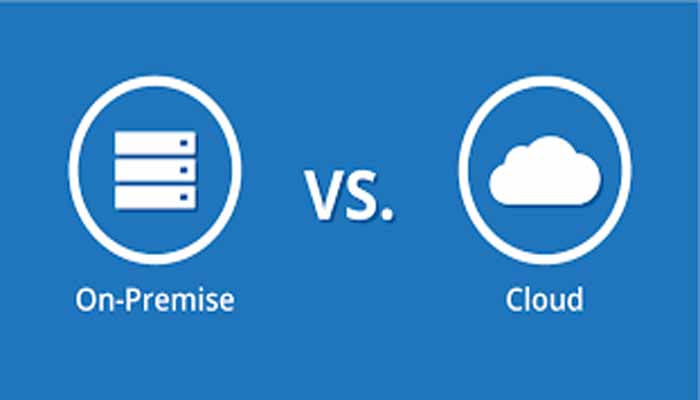
What is the meaning of DBaaS?
Database as a service or DBaaS refers to the service offered on cloud computing platforms that permits the user to use the system without buying or setting up their own hardware, installing any software or managing the database on their own, or hire costly IT experts or skilled DBA professionals for the same. The service provider of the Cloud takes care of everything pertaining to the system, right from periodic backups to upgrades to ensure it stays secure and available 24/7.
Why is DBaaS increasing today?
It has been estimated that the database as a service market is likely to increase in the USA to about $320 billion in the United States. Vendors of data warehouses have joined hands with credible cloud service providers so that they can offer their software in different hosted versions. This allows their customers to enjoy all the advantages of cloud computing for business applications and their search, data storage, and other critical business needs. This is why today; you will find the market for DBaaS and cloud computing to be a dynamic and increasing market.
What are the benefits of DBaaS?
Now, you know what DBaaS is and why its popularity is surging today, it is time for you to discover how it adds value to your business. Professionals from the esteemed name in the field of database management, database consulting, and database administration, remotedba, says that DBaaS has a number of benefits both for small business owners and large corporations if you compare them to an on-site database management system. It offers the company a lot of advantages financially, operationally, and strategically. Let us take a look at some of them listed below-
- Saves costs- When the infrastructure is laid down for database management on-site, the business needs to incur a lot of costs. Scaling of the database is expensive and, in some cases, is wasteful for the organization. When a business chooses the DBaaS platform, it pays a charge called a predictable period fee for the above along with the present resources it consumes. This means the business no longer has to pay extra for any additional capacity that may arise in the future for its hypothetical needs.
- Scaling- With DBaaS, you can scale your database run times as per your demand. You can increase scaling during the peak time and vice versa during the non-rush hours to save costs.
- Database management is simpler and costs lesser- Every savvy business owner knows that to maintain and manage a database on-site, you need a trained and skilled in-house team of database administrators (DBAs). However, when you invest in a DBaaS, you can alleviate the tensions of recruiting a skilled database management team for your system on-premise. The DBaaS manages everything for you.
You still have the choice to control some parts of the system on your own if you wish as per an agreement with the service provider. However, if you wish to relieve yourself from the hassles of effective database management and recruitment of a skilled team for its care, choosing a good DBaaS lightens your burden. You can have a basic IT staff to manage other core affairs for your business, like innovation and creating critical business apps.
- Rapid development and lesser time to market- With an on-site database, the development teams need to request access via the IT team. This generally takes a lot of days and weeks. However, with the DBaaS, these developers can assist themselves with the system’s capabilities to create and configure a database that can seamlessly integrate with their business applications in just some minutes.
- The application and data security- Providers of cloud databases generally offer enterprise-grade protection when it comes to system security. The business is able to get features like controls for access management, data encryption, both at rest and during transit, and integrated identity. Some service providers meet particular standards for regulatory compliance.
- Reduced risk- DBaaS offers businesses a service level agreement or SLA guaranteeing them a specific uptime volume. In case the service provider does not meet the SLA requirements, in case of an unlikely event, the business is compensated for any extra downtime experienced.
- Quality of the software- Esteemed cloud service providers provide businesses an extensive range of intensely configurable DBaaS options- each of them selected in advance for the quality. In this way, the business does not have to wade through hundreds of varied databases for the task.
Experienced DBAs explain that most DBaaS solutions include integrated management tools that simplify database configuration, maintenance, and monitoring. These tools typically provide features such as key management, activity tracking, and logging, making database administration more efficient and organized.
Businesses can deploy standardized API calls to provision and manage various database engines, which simplifies and streamlines the development process. For small business owners planning to adopt DBaaS, consulting with experts from a reputable remote DBA company can be beneficial. It is important to choose a skilled and experienced provider to ensure proper guidance and successful implementation of DBaaS for your business needs.

Leave a Reply