
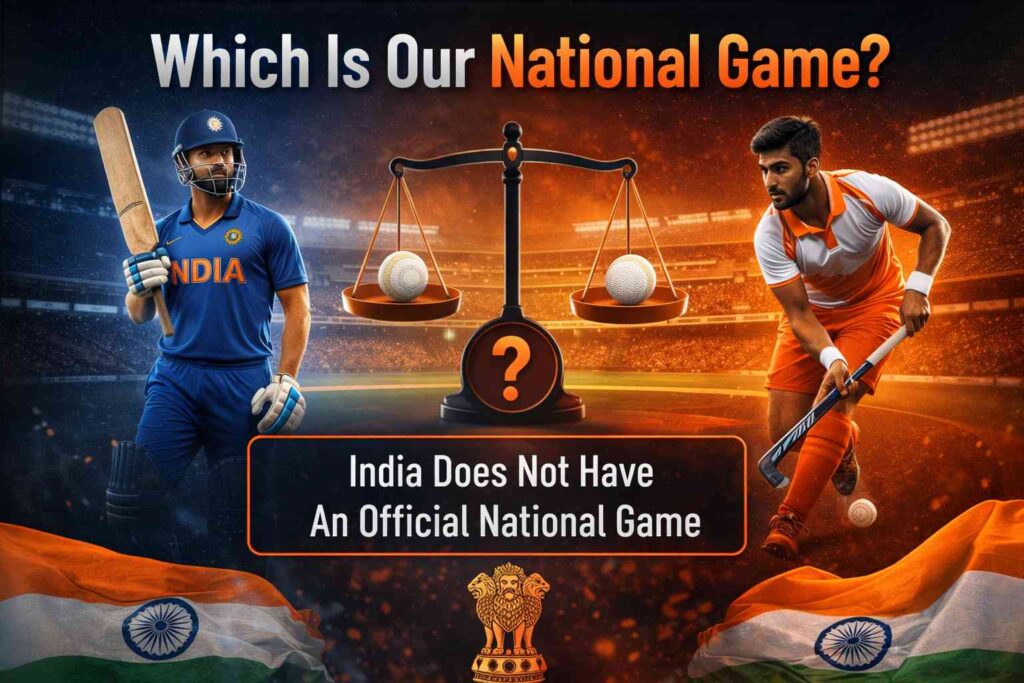
The question “Which is our national game?” seems simple, yet it is one of the most misunderstood general knowledge topics, especially in India. For decades, students, teachers, and even media sources have confidently answered “Hockey”, while others argue for Cricket due to its popularity.
However, the official and factual answer is different from what many people believe.
This in-depth article explains the topic clearly, historically, and officially—removing myths, explaining why confusion exists, and highlighting how India approaches sports at a national level.
Understanding the Meaning of “National Game”
A national game or national sport usually refers to a sport that:
- Represents a country’s cultural identity
- Has historical importance
- Is officially declared or recognized by the government
In many countries, this recognition is formalized through:
- Legal documents
- Government notifications
- Constitutional or ministerial declarations
But here’s the key point:
👉 Not every country officially declares a national game.
Which Is India’s National Game? (Official Answer)
✅ India Does NOT Have an Official National Game
According to the Ministry of Youth Affairs and Sports, Government of India, no sport has been officially designated as India’s national game.
This means:
- Hockey is not the national game
- Cricket is not the national game
- Kabaddi is not the national game
There has never been an official declaration by the Indian government naming any sport as the national game.
Why Is Hockey Commonly Believed to Be the National Game?
Despite the official stance, hockey is widely believed to hold this title. This misconception exists for several strong historical reasons.
1. India’s Golden Era in Hockey
India was once the most dominant hockey nation in the world:
- 8 Olympic gold medals
- Unbeaten streaks in international tournaments
- Legendary players like Major Dhyan Chand, often called the “Wizard of Hockey”
This extraordinary success created a symbolic association between hockey and national pride.
2. Outdated School Textbooks and GK Books
For many years:
- School textbooks
- Competitive exam guides
- Quiz books
incorrectly mentioned Hockey as India’s national game. These errors were repeated across generations, making the belief deeply ingrained.
3. Media and Cultural Influence
Movies, speeches, and news articles frequently referred to hockey as the national game without official verification. Over time, repetition made the claim feel factual.
Why Cricket Is Also Confused as the National Game
Cricket is often mentioned due to its unmatched popularity, but popularity does not equal official recognition.
Why Cricket Feels “National”:
- Massive fan following
- International success
- Cultural integration across regions
Why Cricket Is NOT the National Game:
- No government declaration
- No constitutional or legal status
- Governed by an autonomous sports body, not the state
Cricket’s influence is cultural, not official.
Why India Has No National Game (Policy Perspective)
India’s approach to sports is inclusive and forward-looking.
Key Reasons:
1. Promoting Multiple Sports
India encourages excellence across:
- Badminton
- Wrestling
- Boxing
- Athletics
- Shooting
- Hockey
- Kabaddi
Declaring one national game could unintentionally reduce focus on others.
2. Avoiding Regional or Cultural Bias
Different sports dominate different regions:
- Kabaddi in rural India
- Football in the Northeast and West Bengal
- Wrestling in Haryana
- Hockey in Punjab and Odisha
A single national game may not represent all regions equally.
3. Modern Sports Development Strategy
Initiatives like Khelo India, TOPS (Target Olympic Podium Scheme), and grassroots programs focus on:
- Talent identification
- Infrastructure development
- Olympic performance
This strategy values performance and participation, not symbolic titles.
Does India Have Other Official National Symbols?
Yes. India officially recognizes many national symbols, but sports are intentionally excluded.
Examples include:
- National Animal: Bengal Tiger
- National Bird: Indian Peacock
- National Flower: Lotus
- National Emblem: Lion Capital of Ashoka
The absence of a national game is a deliberate choice, not an oversight.
National Games of Other Countries (Comparison)
Some countries have officially declared national sports:
| Country | National Game |
|---|---|
| Japan | Sumo Wrestling |
| South Korea | Taekwondo |
| Bangladesh | Kabaddi |
| Canada | Ice Hockey (Winter), Lacrosse (Summer) |
| Argentina | Pato |
India’s decision not to declare one is uncommon but intentional.
Is the “National Game” Question Still Asked in Exams?
Yes, but the correct modern answer is now increasingly accepted:
India has no official national game
However, outdated exam materials may still list hockey, which causes confusion.
Frequently Asked Questions (FAQ)
Is hockey officially India’s national game?
No. Hockey is not officially recognized as India’s national game.
Has the government ever declared a national game?
No official notification or law exists declaring any sport as India’s national game.
Why is the misconception still common?
Because of historical success, outdated textbooks, and repeated media references.
Can India declare a national game in the future?
There is no indication of such a plan. Current policies focus on multi-sport growth.
What should students write in exams?
The correct answer is: India does not have an official national game.
Importance of Understanding This Correctly
Knowing the correct answer:
- Prevents misinformation
- Reflects updated general knowledge
- Aligns with official government policy
- Encourages respect for all sports
It also highlights that national pride in sports does not depend on a single title.
Conclusion
So, which is our national game?
👉 India does not have an official national game.
The belief that hockey holds this status is a historical myth, not a legal fact. India’s sports philosophy values diversity, inclusiveness, and excellence across disciplines, rather than assigning symbolic labels.
By understanding the truth, we move toward accurate knowledge and a broader appreciation of sports in India—where every athlete and every sport matters.

Leave a Reply