
Some business decisions seem simple at first. Choosing the right office space rarely falls into that category. For large enterprises, the workplace is more than desks and meeting rooms. It quietly shapes how teams collaborate, how employees experience their daily work, and even how clients perceive the company when they walk in.
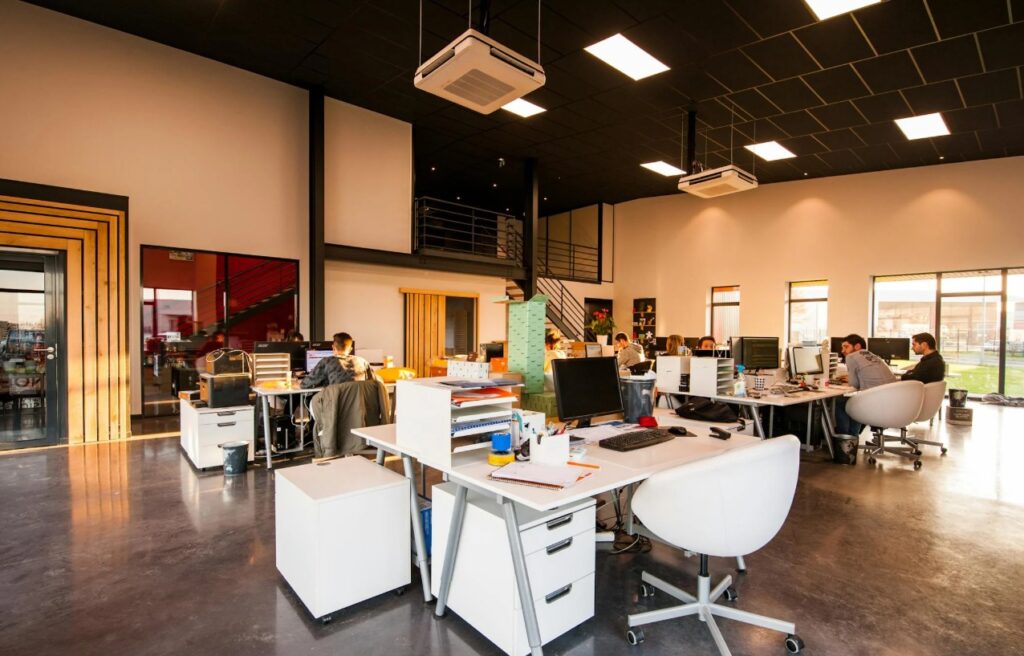
Problems from a poorly chosen workspace rarely appear on day one. They show up slowly. Long commutes start draining employees. Infrastructure limitations surface during routine tasks.
Simple work begins taking longer than expected. Then friction builds. When the office space works well, the opposite happens. Teams settle in faster. Collaboration happens naturally. Expansion feels manageable instead of chaotic.
Because of this, enterprises rarely evaluate just the building anymore. Rent alone doesn’t decide the choice. Location, flexibility, infrastructure, and operational support all become part of the decision.
Traditional vs Flexible Office
For many years, the traditional lease model was the default for large companies. Sign a long-term agreement, design the layout, invest in interiors, and build the workplace exactly as required. For organisations with predictable growth and stable teams, this model still works.
But the trade-offs appear quickly.
Long lock-in periods
- High upfront interior and fit-out costs
- Limited flexibility if team sizes change
- Ongoing responsibility for office operations
This is where Managed Office Spaces started gaining attention.
Instead of building everything from scratch, companies move into ready-to-operate workplaces. Interiors, internet, maintenance, and daily facility management are already handled.
Work begins almost immediately. Something else is changing quietly in the market. Even large corporations that once preferred traditional leases are experimenting with flexible office setups. Not always for the entire workforce.
Sometimes for expansion teams, sometimes for project groups, sometimes simply to test a new market. It introduces agility that traditional offices often struggle to provide.
Tech-Integrated Workspace
Technology inside workplaces has evolved quite a bit. Earlier, it mostly meant internet connectivity and conference room screens. Today, enterprises expect the office space itself to support digital workflows.
Small infrastructure details suddenly matter more.
- Smart access systems
- Occupancy analytics
- Seamless video conferencing setups
- Cloud-connected meeting rooms
- Energy monitoring tools
Individually, these features seem minor. Across hundreds of employees, they change daily operations. Many Managed Office Spaces already include this level of integration. That removes a major burden from enterprise IT teams. Instead of building infrastructure location by location, the systems are already in place. Teams simply move in and start working.
Location Plays a Critical Role
Location decisions remain one of the most sensitive parts of workplace planning. Enterprises rarely choose office space based only on rent or square footage. The surrounding ecosystem matters.
Several questions usually guide the decision:
- Is public transport easily accessible?
- How long is the average commute for employees?
- Are talent pools located nearby?
- Are clients comfortable visiting the location?
In growing business districts, companies often balance two things at once – prestige and practicality. A prime address can strengthen brand perception. But if commuting becomes exhausting, employee satisfaction eventually drops. Many organisations have learned this through experience.
This is partly why flexible office options across multiple micro-markets are gaining traction. Instead of concentrating everyone in a single headquarters, companies distribute teams across locations.
Shorter commutes. Better accessibility.
Technology Infrastructure Is Important
Beyond workplace technology, enterprises also evaluate the underlying infrastructure of an office space. Reliability is essential.
Typical infrastructure checks include:
- High-speed redundant internet connectivity
- Reliable power backup systems
- Data security infrastructure
- IT-ready cabling and network layouts
- Server or equipment support
Any weakness here tends to become expensive later. This is another reason many enterprises consider Managed Office Spaces. These facilities are usually designed with enterprise-grade infrastructure from the beginning.
Teams can move into the office space, connect to the system, and begin operations almost immediately. For companies expanding into new cities, that speed can make a noticeable difference.
Conclusion
This is another area where Managed Office Spaces often stand out. Because these facilities are built for enterprise tenants, the infrastructure is usually enterprise-grade from the start. Teams can move in, connect to the systems, and begin operations almost immediately. For companies expanding into new cities, that speed often makes a difference.

Leave a Reply